Chairman of the Local Assembly Ivan Grigorievich
Dead SoulsIvan Grigorievitch, President of the Local Council, is the municipal official whose authority converts Chichikov’s private bargains in dead serfs into registered deeds. Warmly disposed toward Chichikov and eager to assist him, he commands the local registration process, arranges witnesses and representation, reduces the usual charges, and draws the purchaser into the town’s official social life. His role exposes a civic order in which paperwork, personal connections, and favors operate side by side.
Office and First Encounters
When Chichikov arrives in the provincial town, he makes a point of calling on its leading officials, including the President of the Local Council. Chichikov flatters the officeholder and, along with the Vice-Governor, mistakenly addresses him as “Your Excellency,” a breach of rank etiquette that nevertheless delights the men. The President’s position thus enters the story first as part of the network of dignitaries whom Chichikov cultivates through calculated respect and compliments.
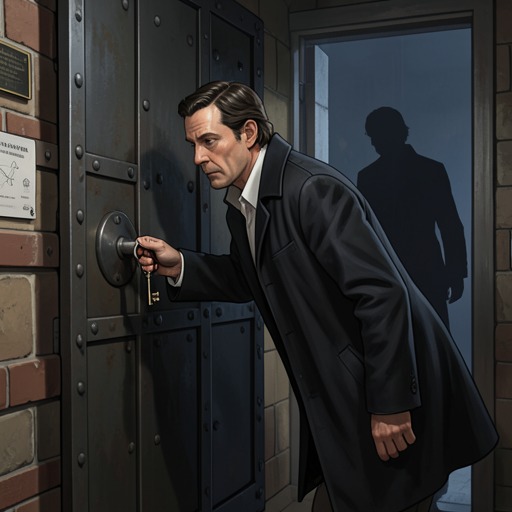
Their relationship becomes concrete when Chichikov goes to the municipal offices to register the serfs he has purchased. The interior contrasts with the building’s impressive exterior: corridors and rooms are dirty, and the narrator likens the law’s reception of visitors to an unceremonious dressing gown. Chichikov asks where serf-indenture business is handled, presents his purchase list, and says that the transactions must be registered. The clerk Ivan Antonovitch initially insists that additional proof is needed and that the matter cannot be completed that day. Chichikov invokes his friendship with the President, but the clerk indicates that this connection alone will not suffice.
The Registration and Its Participants
At the President’s apartment, Chichikov unexpectedly encounters Sobakevitch, another seller of the dead serfs, whose presence threatens to expose the secrecy of the bargains. The President greets Chichikov with an embrace and congratulates him on the purchases, revealing that he has already heard about the sales. When Chichikov produces a letter from Plushkin, the President reads it and agrees to act as Plushkin’s attorney. Chichikov asks to finish the registration immediately because he intends to leave town the next day; the President agrees to have the deeds completed that day but insists that Chichikov remain in town.
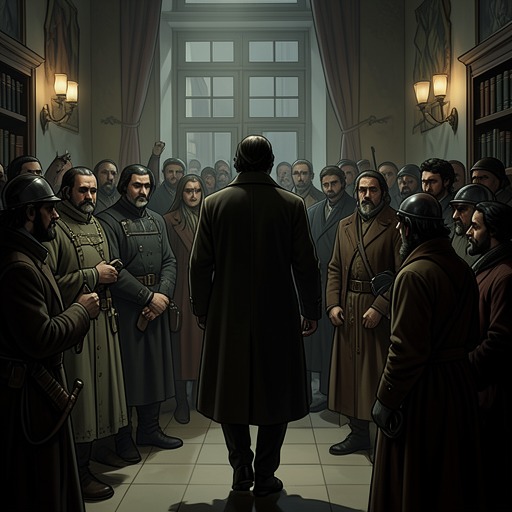
The President then sets the municipal machinery in motion. He orders Ivan Antonovitch to handle the indentures and summons witnesses, including the Public Prosecutor and the Inspector of the Medical Department. Sobakevitch specifies that there should be at least two witnesses for each party, and Chichikov asks for the representative of a woman landowner with whom he has also done business. The President promises to meet these requests and specifically forbids Chichikov from giving officials gratuities, saying that his friends do not pay even a copper. His stated courtesy accompanies real intervention: he organizes the people and procedures needed to make the sale legally effective.
The deeds make a particularly favorable impression when the President sees that the purchase total approaches one hundred thousand roubles. He looks at Chichikov with profound satisfaction and praises the size of the haul. The assembled witnesses sign, and Ivan Antonovitch has the indentures docketed and registered. Chichikov is charged only a small amount in fees: the President has ordered that he pay half the usual charges, with the other half somehow debited to another applicant for serf registration. The episode shows both formal procedure—applications, powers of attorney, witnesses, signatures, and registration—and the discretionary adjustments through which officials shape its cost and pace.
Hospitality and Civic Network
For the President, registration does not end with the completion of the paperwork. He proposes that the company “wet the bargain,” while Chichikov offers champagne in return for the officials’ agreeable company. The President rejects the offer: Chichikov is their guest, and the officials, he says, have a duty to entertain him. He suggests going to the Chief of Police’s house, where food, wine, and a game of whist await. Administrative business flows directly into hospitality, binding the purchaser to the town’s officials through shared celebration as well as official acts.
This public warmth helps explain why Chichikov’s dealings become common knowledge among the authorities. Later, when the town is thrown into confusion by reports of the dead-soul purchases and an alleged scheme involving the Governor’s daughter, the President is part of the civic world through which information and conjecture circulate. The sales he helped register have become one of the subjects officials try to interpret, though the investigation does not establish Chichikov’s identity or clarify the true nature of his scheme.
Significance
Ivan Grigorievitch is not portrayed as an investigator who understands the implications of Chichikov’s enterprise. Instead, he treats the transactions as a substantial purchase, greets the buyer as a friend, and responds to the nearly hundred-thousand-rouble total with open approval. His decision to reduce the fees and arrange a celebration gives Chichikov practical assistance and social legitimacy, even as the town’s officials later find themselves unable to make sense of the affair.
The registration scene’s satire rests on this mixture of procedure and personal favor. Chichikov must supply documents, powers of attorney, and witnesses, but completion depends as well on the President’s intervention, the clerk’s handling of the papers, and an unexplained redistribution of fees. Ivan Grigorievitch’s generosity is genuine within the scene, yet it also exposes how official authority can turn a dubious transaction into an orderly, publicly recognized deed. The President’s welcome helps the purchase pass through the institution; it cannot prevent the registered sales from becoming material for rumor and alarm.